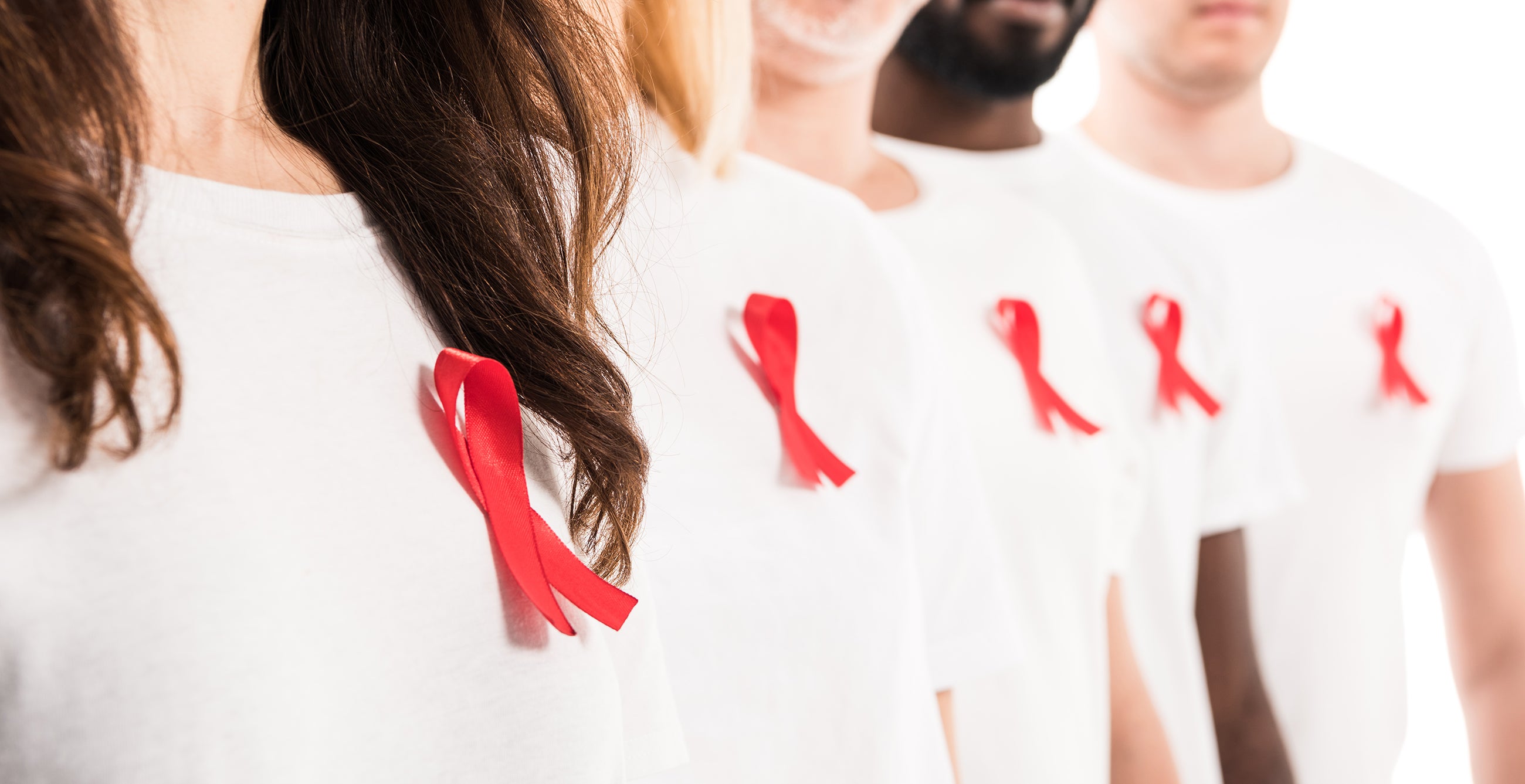

We want to be informed about our health in any case. Regular check-ups, a balanced diet and daily exercise help our body stay healthy and function better.
Protection and knowledge are especially important when we fear a possible infection with a virus .
What is a taboo subject for many people, we address openly and comprehensively, as education in all health areas is of utmost priority and should not be concealed under any circumstances.
Love is one of life's many advances. It enriches, inspires, strengthens, and connects us. Nevertheless, it carries some risks that we should protect ourselves from for a carefree and unrestrained love life.The infection with a sexually transmitted disease can happen faster than one thinks and often remain undetected for too long.
The HIV virus poses the greatest threat to our health and can become life-threatening in some cases. Are you concerned that you may have been infected with the virus or do you want to protect yourself before a new partnership? Do not hesitate and conduct an HIV test.
Everything you need to know about such HIV tests can be found in this article.

What makes the HIV virus so dangerous?
First of all, it is important to know how the HIV virus enters your body and can weaken your immune system. "HIV" stands for "Human Immunodeficiency Virus." The virus is a retrovirus and can integrate its genetic material into the genome of the affected host cells. The HI virus primarily attacks the T-helper cells, thereby weakening the immune system of the affected organism.
The body is consequently much more susceptible to diseases that are unproblematic and essentially harmless in non-infected individuals.
The danger lies in the late detection of an infection and the possible development of the disease pattern AIDS. If an HIV infection is not treated, it can lead to AIDS, the so-called "Acquired Immunodeficiency Syndrome," which is an immune deficiency syndrome.
It poses a serious threat to human health as the immune system is severely weakened, allowing pathogens to easily enter the body. Infected individuals often suffer from pneumonia and fungal infections.
Risk situations
There are various ways to become infected with the HIV virus.
Unprotected sexual intercourse
HIV is one of the STIs, the sexually transmitted infections. An infection therefore often occurs through unprotected sexual intercourse.
There is a risk of having been infected with the HIV virus. Concerns are only justified if you do not know your partner's HIV status or if it is known that one of the involved persons carries the virus.
Particularly risky are unprotected vaginal and anal intercourse. With unprotected oral sex, the risk is significantly lower, but infection cannot be completely ruled out. There is also a low risk of infection when ingesting blood and semen in the mouth.
An active love life with many changing sexual partners greatly increases the risk of infection.In such cases, you should always clarify each other's HIV status before intercourse and use safe protection.
Blood transfusions
If HIV-infected blood enters your bloodstream, there is a high risk of becoming infected with the virus. For this reason, only clean utensils should be used during a blood transfusion.
Drug use with shared utensils
Among people who regularly use drugs, the risk of HIV infection is particularly high. If you use drugs intravenously, you should definitely ensure not to share the used syringe with anyone else.
First inconspicuous, then dangerous – Symptoms of an infection
In many cases, an infection is discovered much later than it could have been because the initial symptoms are understood as harmless and mistaken for mild flu symptoms. It is only in the course of later phases, with the advanced spread of the virus in the organism, that the symptoms become more severe.
Among the common symptoms – with decreasing probability are the following:
- Fever
- Fatigue/Exhaustion
- general feeling of illness
- Loss of appetite
- Joint pain
- Skin rash
- Night sweats
- Muscle pain
- Fever in combination with skin rash
- Sore throat/Inflammation in the throat
- Mouth ulcers
- more than 2.5 kg sudden weight loss
Infected individuals can live long with appropriate treatment without developing AIDS. To make treatment possible, a positive test result must be present. If you have concerns about your HIV status, do not hesitate to take an HIV test. You have many different options available.
The HIV test – the only reliable way
An HIV test is the only way to find out if you have HIV. There are different types of HIV tests that are conducted in various ways. You can take a test anonymously, with counseling at testing centers such as AIDS support services, health departments or checkpoints, and at your general practitioner.
An HIV test always involves a blood test.
1. The laboratory test
During a laboratory test, blood is drawn from you by your doctor and sent to a laboratory for examination. Alternatively, you can use a Probatix test kit to take a few drops of blood from your finger (so-called capillary blood) and send it to the laboratory.
This is an antigen-antibody test, in which your blood is tested for antibodies and components of the HIV virus. An infection can only be reliably detected six weeks after the risk contact. You will receive the test result after two days.
2. The rapid test
Rapid tests are usually conducted in counseling centers. Here, a drop of blood from your fingertip is examined.
This is an antibody test, which means that your blood is tested exclusively for antibodies against the HIV virus. A reliable statement can only be made three months after the risk contact.
You will receive the test result after approximately 30 minutes.
3. The Self-Test
The self-test is a rapid test that you can perform privately at home. For many people, this variant is the most comfortable. Here, too, you take a drop of blood from your fingertip.
A reliable statement can also only be made three months after the risk contact. You usually receive the test result within 15-30 minutes.
However, self-tests can provide inaccurate results. You should pay close attention to the CE mark and only use approved tests.
When should you get tested?
An HIV test only makes sense if you have significant uncertainties about your HIV status or that of your partner, lead an active sexual life with changing partners, or observe abnormal changes in your body.
If you notice any of the above signs, it is advisable to get tested for HIV. If you had a risk contact, you should definitely conduct an HIV test for reassurance. Pregnant women are also advised to take an HIV test as a precaution, as there is a risk that the baby could become infected with the virus in the womb.
If you regularly use drugs intravenously with other people, an HIV test can give you a clear picture of your health status.
Threatening, yet not untouchable – possible treatments
If you receive a positive test result, a second confirmation test with a new blood sample is necessary in any case.Only after double confirmation can appropriate treatment of the infection be initiated.
If you receive a negative test result, you should additionally undergo a PCR test. This will show positive 1-2 weeks earlier in case of an infection than an antibody test and can correct a possible false negative result.
Pre-Exposure Prophylaxis
You have the opportunity to prevent HIV through Pre-Exposure Prophylaxis (PrEP) . This is a medicinal precaution where you regularly take medication that reduces the amount of virus in the blood. HIV is therefore undetectable and not transmissible.
This treatment is useful for people with a higher risk of infection. The treatment is covered by statutory health insurance. People undergoing this treatment must be tested with an HIV test before starting prophylaxis, four weeks after starting treatment, and then every three months.
Post-Exposure Prophylaxis
In contrast, there is Post-Exposure Prophylaxis (PEP). This form of treatment is useful if your risk of infection is very high.Here, too, you will receive the appropriate medication, which you should ideally take within two hours, and at the latest 48 hours after the risk contact. This can prevent the spread of HIV at an early stage.
It is important to note that your life expectancy, with early detection of the virus and appropriate therapy, is just as high as that of the general population. Treated individuals can live their lives as usual without major restrictions.

Do not hesitate …
...to have an HIV test conducted. Many people feel uncomfortable with such an examination because it reveals information about their sexual life to strangers. However, an HIV test should not be something to be ashamed of. The examination concerns your well-being and that of your fellow human beings in any case.
Safety is the foundation for a carefree, more enjoyable love life. Safe sex is the keyword here to prevent possible infections. Always inform yourself about your partner's HIV status and protect yourself rather too much than too little.
With Probatix, it is now very easy to have an HIV test conducted regularly and to retrieve the results. Simply sign up with Probatix Health and schedule an appointment!
Frequently Asked Questions about HIV Tests
What is an HIV test and how does it work?
What is an HIV test and how does it work?
An HIV test checks whether antibodies or components of the HIV virus are detectable in the blood. There are different testing methods, including antibody tests, antigen-antibody combination tests, and PCR tests.
When should one take an HIV test?
When should one take an HIV test?
An HIV test should be conducted if there was a risk of infection, such as unprotected sexual intercourse or contact with infected blood. It is also recommended during pregnancy.
How long does it take for HIV to be detectable in a test?
How long does it take for HIV to be detectable in a test?
Detectability depends on the type of test. Antibody tests can detect HIV about 3-12 weeks after infection, PCR tests as early as 1-2 weeks.
Is an HIV test anonymous and discreet?
Is an HIV test anonymous and discreet?
Yes, most providers, including Probatix, ensure absolute discretion and anonymized testing procedures, especially for self-tests at home.
How reliable are HIV tests?
How reliable are HIV tests?
Modern HIV tests are very reliable. Antigen-antibody tests achieve an accuracy of over 99%. Repeat tests in case of a positive result confirm the diagnosis.
What does a positive test result mean?
What does a positive test result mean?
A positive result indicates an HIV infection. However, this is not a definitive diagnosis and must be confirmed by further tests.
Can an HIV test be conducted at home?
Can an HIV test be conducted at home?
Yes, with a certified self-test or a test kit like Probatix, you can conveniently and safely test yourself at home.
How to prepare for an HIV test?
How to prepare for an HIV test?
No special preparations are necessary. It is important to consider the possible time frames for the detectability of HIV.
What is the cost of an HIV test?
What is the cost of an HIV test?
The costs vary depending on the type of test and provider. Self-tests and home test kits are usually inexpensive and can be ordered directly online.
Why is an HIV test important?
Why is an HIV test important?
An HIV test helps to detect and treat an infection early. Early diagnosis improves quality of life and prevents the transmission of the virus to others.